Column · @manuelpukd337
Basement Waterproofing Myths That Could Cost You Money

A wet basement rarely stays a simple nuisance for long. It starts with a musty smell after heavy rain, a darker strip along the wall, or a cardboard box that feels damp underneath. Homeowners often treat those early signs as cosmetic, or worse, as normal for an older house. That is where the expensive mistakes begin.
Basement Waterproofing gets surrounded by bad advice faster than almost any other home repair topic. Some of that advice comes from well-meaning neighbors. Some comes from internet shortcuts that flatten a complicated issue into one cheap fix. Some comes from contractors who sell one system and pretend it solves every problem. The trouble is that water behaves differently from house to house. Soil type, grading, foundation age, gutter condition, hydrostatic pressure, seasonal groundwater, and even how the basement is finished all change the right answer.
I have seen homeowners spend a few hundred dollars on paint, then a few thousand on interior patching, then far more on mold cleanup and flooring replacement because the real source of the moisture never got addressed. I have also seen people panic and buy a full perimeter drainage system when all they really needed was proper exterior grading, downspout extensions, and a crack repair. Both mistakes come from believing myths instead of diagnosing the actual cause.
What follows are the Basement Waterproofing myths that cost people money most often, and what reality usually looks like in the field.
Myth 1: A little dampness is normal in every basement
This idea has been around for decades, especially in older neighborhoods where many homes were built before modern drainage practices became common. People say things like, “It’s a basement, it’s supposed to smell like that,” or “Every house gets a little water in the spring.” Those phrases have probably delayed more repairs than almost anything else.
Some older basements do have more vapor movement and seasonal humidity than upper floors. That part is true. What is not true is the leap from “common” to “acceptable.” If basement walls are sweating, if the air smells earthy, if stored items get mildewed, or if you see white mineral deposits on masonry, moisture is active enough to matter. It may not be dramatic flooding, but it is still doing damage.
The costs here often sneak up on people. A minor moisture problem can ruin paint, buckle laminate flooring, stain drywall, rust appliances, and push relative humidity high enough for mold growth. Even if visible water never pools on the floor, consistent dampness can shorten the life of anything porous in the basement. I have walked through basements where the owner insisted there was “never water,” yet the bottom two feet of paneling were soft, the tack strips were blackened, and the dehumidifier ran nonstop.
Treating chronic dampness as normal is usually a way of postponing investigation. Water stains and odors are information. They tell you the basement is interacting with moisture in a way that deserves a proper diagnosis.
Myth 2: Waterproof paint will solve the problem
This is one of the costliest myths because it sounds practical and inexpensive. A few buckets of masonry sealer, a weekend of work, and the walls look fresh again. For surface appearance, it can be satisfying. For stopping water intrusion, it often does very little.
Paints and sealers may reduce minor vapor transmission in some situations, especially on sound masonry with only light dampness. They can be useful as part of a broader moisture-management plan. What they cannot do is resist meaningful hydrostatic pressure for long. If water is pushing through the wall or rising beneath the slab, the coating becomes the battlefield, and coatings usually lose. They blister, peel, or trap moisture where you do not want it.
I have seen basement walls painted three or four times in layers, each coat covering the same tide marks. The owner feels proactive because money is being spent, but the source remains. Meanwhile, the hidden cost keeps growing. Once finishes go over that wall, moisture gets harder to monitor and easier to ignore.
When waterproof paint is marketed as a complete Basement Waterproofing solution, be skeptical. A coating is not a drainage strategy. It https://ezlocal.com/nj/west-caldwell/waterproofing-contractor/0918145021 does not regrade the yard, extend downspouts, lower water pressure at the foundation, seal an active crack from the exterior side, or create a reliable collection path for groundwater. It can have a place, but it should never be mistaken for a cure.
Myth 3: If there is no standing water, there is no real problem
Many homeowners imagine basement water problems as ankle-deep flooding after a storm. That is one form of failure, but not the only one. The more common pattern is subtle and cumulative. Moisture enters in small amounts through pores in concrete, cove joints where the wall meets the floor, hairline cracks, window wells, or humid air condensing on cool surfaces. Nothing looks catastrophic, so the issue gets downgraded.
The money loss happens in secondary damage. A finished basement can absorb a surprising amount of moisture before obvious symptoms appear. Carpet pad acts like a sponge. Drywall wicks upward. Wood framing near slab level takes on moisture repeatedly, then dries, then takes on moisture again. That cycle is hard on materials. It is also exactly the kind of environment where mold can establish itself behind finished surfaces.
A basement does not need visible puddles to justify attention. If your dehumidifier fills unusually fast, if metal tools rust down there, if books or holiday decorations smell stale, or if one corner always feels clammy, the basement is already telling you something. Waiting for standing water is not saving money. It is delaying an easier and cheaper phase of repair.
Myth 4: All basement leaks come from foundation cracks
Cracks get all the attention because they are visible and easy to point to. Homeowners see a vertical line in the wall and assume they have found the culprit. Sometimes they have. Sometimes the crack is simply the most obvious feature in a bigger drainage problem.
Water follows the path of least resistance, but it also obeys gravity, soil saturation, and pressure. A leak that appears through a crack may be driven by overloaded gutters, short downspouts, negative grading, clogged footing drains, an overflowing window well, or a high water table. Seal the crack without fixing the conditions feeding it, and you may stop one leak only to see moisture appear six feet away at the cove joint next season.
I remember a basement where the owner had injected the same wall crack twice over five years. The repair itself was not badly done. The real issue was that both downspouts on that side of the house discharged a foot from the foundation into compacted clay soil. During sustained rain, the ground became saturated and pressed water toward the wall. Extending the downspouts and correcting the slope outside reduced the water burden dramatically. The crack repair finally had a chance to succeed because the drainage problem stopped reloading the area.
A crack matters, but it should be treated as evidence, not always as the whole case.
Myth 5: Interior systems and exterior systems do the same job
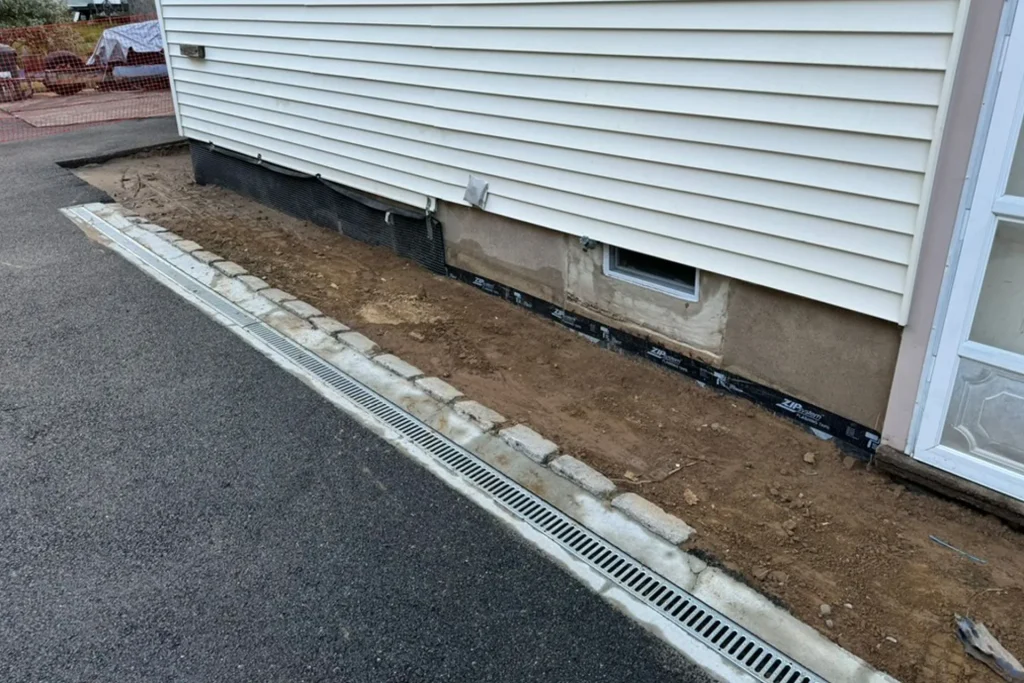
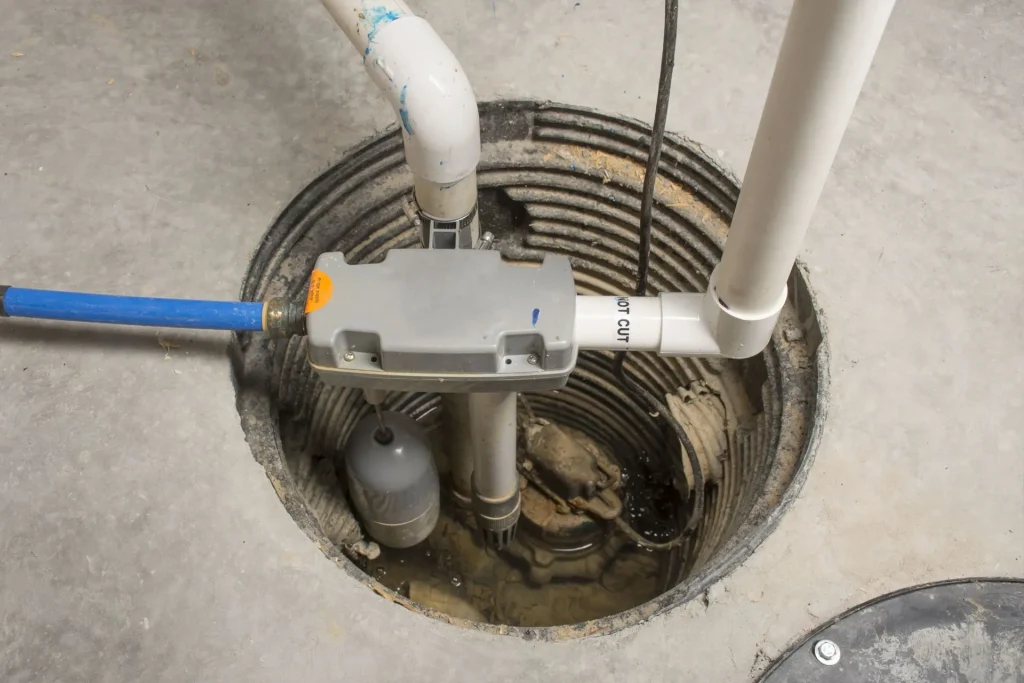
This misunderstanding causes both overspending and underspending. Interior drainage systems, such as perimeter channels feeding a sump pump, are often very effective at managing water that has already reached the foundation perimeter or slab edge. Exterior waterproofing systems, by contrast, aim to keep water away from the wall in the first place through excavation, membrane application, drainage board, footing drain work, and backfill correction.
Those are not interchangeable strategies. They solve different parts of the problem.
An interior system can be the best choice when excavation is impractical, when neighboring structures limit access, when the issue is groundwater beneath the slab, or when cost control matters. It controls water after entry and can keep a basement dry and usable. What it usually does not do is relieve moisture contact with the outside face of the wall. That distinction matters if the wall itself is deteriorating, if finishes are sensitive, or if long-term preservation of the structure is the top priority.
Exterior waterproofing is more invasive and often more expensive, but there are cases where it is the right solution. If the wall is bowing from saturated soil pressure, if there are major penetration points outside, or if an addition or landscaping project already exposes the foundation, exterior work may make excellent sense.
The myth is not that one system is always better. The myth is that they are equivalent. A good contractor should explain what each method controls, what it does not control, and why the recommendation fits your house.
Myth 6: A dehumidifier means the basement is waterproofed
A dehumidifier is a useful appliance. In many basements, it is practically essential during humid months. But it treats air moisture, not bulk water intrusion. That distinction gets blurred all the time.
If summer humidity is drifting into the basement and condensing on cool ductwork or concrete, a dehumidifier can make a major comfort difference. If the basement has mild residual dampness after the main water issues were corrected, it can be part of good maintenance. What it cannot do is stop water entering through a crack, cove joint, porous block wall, or poorly drained window well.
People often get lulled into a false sense of control because the unit is collecting gallons of water. They think, “At least it’s handling it.” What it is really doing is processing the symptom after the moisture is already inside. Meanwhile, insulation can remain damp, framing can stay at elevated moisture content, and hidden materials can degrade while the room feels better on the surface.
A dehumidifier belongs in the conversation, but it should never be used as proof that Basement Waterproofing is complete.
Myth 7: Gutters and grading are minor details
This is one of the few areas where a relatively small correction can prevent a large bill later. It is also where people tend to cut corners because the fixes seem too simple to matter.
Most basements leak because too much water is being allowed to collect near the foundation. Roof runoff is a huge part of that. A typical roof can dump a surprising amount of water during a storm. If gutters overflow or downspouts discharge right at the base of the wall, you are concentrating rainfall exactly where you do not want it. Add a yard that slopes toward the house, and the foundation becomes the lowest point in the drainage pattern.
I have seen wet basements become dry after basic exterior corrections that cost far less than interior demolition. Clean gutters. Add proper downspout extensions. Restore slope away from the house. Rebuild a sunken area beside the steps where water ponds. Replace a crushed splash block with solid discharge piping. None of those steps is glamorous, and none should be oversold as universal. But dismissing them as minor details is expensive.
If you want a practical first look at your risk points, pay attention to these areas:
- downspouts that discharge too close to the house
- soil or hardscape that slopes toward the foundation
- window wells that fill or drain slowly
- gutters that overflow during moderate rain
- mulch beds piled too high against siding or foundation walls
Those details often decide whether a basement stays merely humid or starts taking on water.
Myth 8: Basement Waterproofing is a one-size-fits-all service
This myth survives because many companies are organized around a narrow set of products. If a company installs interior drains all day, nearly every basement starts to look like an interior drain problem. If another contractor specializes in crack injection, every wet wall looks like a crack problem. Homeowners hear confident recommendations and assume certainty means accuracy.
Real diagnosis is more careful than that. The same symptom can have different causes in different houses. Water at the floor perimeter may point to hydrostatic pressure, a failed footing drain, or runoff loading one side of the structure. Efflorescence on a block wall might indicate chronic exterior saturation, not a single leak point. Condensation on pipes can be mistaken for seepage. A basement bathroom or laundry area adds plumbing variables that can muddy the picture further.
A sound inspection usually includes questions about timing. Does moisture appear only after heavy wind-driven rain, during spring thaw, after several days of saturation, or year-round? It should also include exterior observation. Are there grade issues, paved surfaces pitching inward, missing gutter sections, or signs of concentrated runoff? If the basement is finished, are the symptoms localized or widespread? One wet corner tells a different story from a basement-wide humidity problem.
The best recommendations are tailored, sometimes boringly so. That is a good sign. Water problems are solved by matching the method to the mechanism, not by forcing every house into the same sales package.
Myth 9: New houses do not need to worry about water
New construction can leak. In some cases, it leaks sooner because landscaping has not settled yet, grading was rushed, backfill was poorly compacted, or drainage details were value-engineered down to the minimum. Homeowners often believe a newer home must be well protected simply because it is newer. That faith can delay warranty claims or early corrections that should be addressed promptly.
I have seen recently built homes with buried downspouts that disconnected underground, causing water to dump right beside the footing. I have seen window wells installed without adequate drainage, and I have seen finish-grade settlement create troughs against the foundation within the first couple of years. None of those issues cares how new the house is.
The bigger money risk with a newer home is complacency. Owners assume the materials are fresh, the code is current, and the basement is therefore safe. Then they finish the basement too quickly, covering warning signs before they understand the moisture behavior through a full cycle of seasons. A brand-new carpet over an unresolved moisture issue is still a bad investment.
Myth 10: The cheapest quote saves the most money
Basement repair pricing varies widely, which naturally pushes homeowners to compare numbers. They should. But the lowest bid becomes expensive when it leaves out diagnosis, omits related drainage work, uses a method unsuited to the problem, or provides weak after-service support.
The expensive part of a bad waterproofing job is not just paying twice. It is the collateral damage between the first failed repair and the second attempt. Flooring gets replaced, drywall is opened again, stored items are discarded, and confidence in the basement disappears. If the space is finished, temporary displacement adds another layer of cost.
A better way to compare proposals is to focus on scope and reasoning rather than just price. Ask what source of water the contractor believes is at work. Ask how the proposed system addresses that source. Ask what conditions might remain even after the work is done. A contractor who says, “This will control seepage at the cove joint, but it will not stop vapor through the wall, so keep the dehumidifier,” is usually giving you a more honest picture than someone promising total dryness under every condition with no caveats.
When reviewing estimates, the questions that matter most are usually these:
- What evidence points to the diagnosis?
- What exactly will this system control?
- What does it not control?
- What maintenance does it require?
- How will the work affect finished areas and future resale disclosure?
Those answers tell you more than the bottom-line number ever will.
The hidden costs people forget to count
When homeowners think about water in the basement, they often focus on the repair invoice and little else. That misses much of the financial picture. Moisture problems carry side costs that do not always show up immediately.
There is the cost of damaged belongings, which is often underestimated because basement storage tends to be full of things people are not actively using. There is the cost of indoor air quality issues, especially if the basement is connected to HVAC return paths that circulate odors and spores upward. There is the impact on resale, since moisture history raises questions during inspection even if the basement is dry on showing day. There is also the practical cost of lost use. A basement that cannot be trusted does not function as living space, workout space, office space, or reliable storage.
In some homes, the numbers get serious fast. Replacing even a modest amount of finished basement flooring and lower drywall can cost several thousand dollars. If mold remediation becomes necessary, the bill climbs further. If structural movement is tied to poor drainage over time, the scope broadens again.
That is why the cheapest myth is usually the one that delays real diagnosis. Delay feels economical in the moment, but water keeps working while people debate whether the problem is worth fixing.
What sensible homeowners do instead
The smartest approach is rarely dramatic. It starts with observation. Notice when the issue occurs, where it appears, and what weather patterns trigger it. Check the outside before you assume the inside is the whole story. Look at roof drainage, grading, window wells, hose bibs, and paved surfaces. If the basement is finished, pay attention to smell and humidity, not just visible leaks.
Then get advice from someone who explains mechanisms, not just products. Good Basement Waterproofing decisions are built on cause and effect. If a recommendation sounds universal, it probably is not precise enough. If it sounds too cheap to be true, it often is. If it sounds extremely expensive but no one has explained why less invasive corrections will not work, keep asking questions.
A dry basement is not created by wishful thinking, miracle coatings, or generic sales scripts. It comes from reducing the water load around the house, managing the water that still reaches the foundation, and matching the repair method to the actual failure point. That may mean a simple exterior drainage correction, a targeted crack repair, a dehumidification plan, an interior collection system, an exterior membrane, or some combination of those.
The myth that costs the most is the belief that basement moisture is vague, inevitable, or too ordinary to deserve careful attention. It is none of those things. Water leaves clues, and when you read them early, you usually spend less.
ARD Waterproofing
98 Smull Ave, West Caldwell, NJ 07006, United States
+1 917-691-8411
FAQ About Basement Waterproofing
Can you 100% Waterproof a Basement in West Caldwell?
A properly designed system can substantially reduce basement water intrusion, but no method can promise protection against every flood, equipment failure, or future change in site conditions. The first step is identifying whether moisture comes from surface runoff, groundwater, plumbing, or condensation. Solutions may include grading and gutter improvements, drainage, foundation repairs, and a sump system. Review the specific coverage and exclusions of any written warranty.
How much does it cost to professionally waterproof a basement in NJ?
There is no single price that fits every basement. Cost depends on the cause of the leak, the area needing work, access, excavation requirements, drainage design, sump equipment, and restoration of disturbed finishes or landscaping. Request an on-site assessment and an itemized written estimate that explains the scope, exclusions, and maintenance requirements before comparing proposals.
How long does foundation waterproofing last in West Caldwell, NJ?
Service life varies with the waterproofing materials, installation quality, soil and water conditions, and maintenance. Drainage components and pumps may require servicing or replacement even when other parts of the system remain functional. Keep gutters, drainage outlets, and sump equipment maintained, and have recurring leaks or changes in foundation condition assessed. Ask for product-specific expectations and written warranty terms rather than relying on one lifespan for the entire system.